How to Fix a Garage Door: What You Can Do Yourself and When to Call a Pro
.
| Most garage door problems fall into one of two categories: things you can fix in a few minutes (dead remote battery, dirty sensors, tripped outlet, locked wall console), and things that need a professional (broken springs, snapped cables, off-track doors). A quick way to tell the difference: pull the red emergency release handle and lift the door by hand. If it feels light, the issue is with the opener. If it feels very heavy, the springs have likely failed. Springs should always be handled by a professional — the tension involved makes this one of the more dangerous repairs in the home. |
Your garage door stopped working. Maybe it won’t open at all. Maybe it goes halfway and stalls. Maybe it closes and immediately reverses back up. Whatever the symptom, you want to know what’s going on before you call anyone.
This post covers the five most common causes of garage door problems and helps you figure out which ones you can handle on your own. We also explain where the line is between a safe DIY fix and something that genuinely needs professional hands.
We repair garage doors across the San Antonio area every day. Some calls we get could have been solved by the homeowner in a few minutes. Others are situations where someone tried to fix it themselves and ended up with a bigger problem. The goal here is to help you figure out which one you’re dealing with.
The 60-Second Garage Door Diagnostic
Before you look up parts, watch tutorials, or pick up the phone, run through this checklist. It covers the five most common reasons a garage door stops working, and three of them take less than a minute to check.
Step 1 — Check the obvious stuff first
Is the opener plugged in? It sounds basic, but it comes up more often than you’d think. Check whether the outlet has power. If it’s a GFCI outlet (common in garages), press the reset button on the outlet itself. Also check the wall-mounted button: most openers have a lock feature that disables all remotes. If someone pressed it by accident, the door will only respond to the wall button.
Step 2 — Test the remote and wall button separately
Press the wall button inside the garage. If the opener responds but the remote doesn’t, the problem is the remote. Start by replacing the battery. If the wall button doesn’t work either, the issue is with the opener unit or the power source.
Step 3 — Check the sensor lights
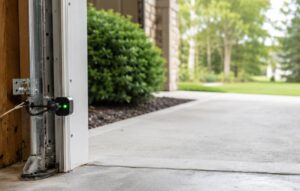
The two small sensors at the bottom of the tracks each have an indicator light. One should show a steady green light (the receiving sensor) and the other a steady amber light (the sending sensor). If either is blinking or off, the sensors are misaligned or blocked. Check for dirt on the lens, a spiderweb, or something sitting in the path. Adjust the sensor gently until the light goes steady. This is one of the most common garage door problems, and it costs nothing to fix.
Step 4 — Try the manual release
Pull the red emergency release handle hanging from the opener rail. This disconnects the door from the opener so you can lift it by hand. If the door goes up without much effort, the spring system is likely fine and the problem is with the opener.
If the door feels very heavy or won’t stay up on its own, the springs are the issue. Springs are what actually carry the door’s weight. A properly functioning spring system makes a 200-pound door feel manageable to lift. When the springs fail, that counterbalance is gone and the door becomes difficult to move. Stop here. Do not attempt to adjust or replace the springs yourself.
Step 5 — Listen and observe
Does the opener motor run when you press the button? If it runs but the door doesn’t move, the internal gears may be stripped. If you hear grinding or scraping as the door moves, the rollers or track may be worn. If the door rises unevenly (one side higher than the other), a cable or spring may have failed on one side. These details help a technician diagnose the problem much faster if you do end up making a call.
Problems You Can Probably Fix Yourself
Not every garage door issue needs a service call. Here are the problems most homeowners can handle with basic tools and a few minutes:
Dead remote battery
This is behind a surprising number of garage door calls. Pop open the back of the remote, replace the battery, and test it. If you have a second remote or a keypad, try those too. If multiple remotes stopped working at the same time, the issue is more likely with the opener’s receiver than the batteries.
Misaligned safety sensors
The sensors sit a few inches off the ground on each side of the door. They send a beam across the opening, and if anything breaks that beam, the door won’t close. Common causes: a bike tire, a box that shifted, or the sensor getting bumped. Clean the lenses with a dry cloth and adjust each sensor until both indicator lights are steady. This is the most common reason a garage door won’t close, and it’s a free fix.
Tripped outlet or GFCI reset
Garages often have GFCI outlets that trip during power surges or storms. If your opener suddenly has no power, look for the outlet with the small Reset button and press it. Also check your circuit breaker. This is a zero-cost fix that solves the problem immediately.
Locked wall console
Most wall-mounted opener buttons include a lock feature. When active, it disables all remotes and keypads. The door will only respond to the wall button. If your remotes stopped working but the wall button still opens the door, this is likely why. Press and hold the lock button to turn it off.
Remote reprogramming
If a new battery didn’t fix the remote, it may have lost its pairing with the opener. Most openers have a Learn button on the motor unit. Hold the remote button near the unit and follow the programming steps in your opener’s manual. This is a straightforward process that doesn’t require any tools.
| Tip: Spray a silicone-based lubricant on the hinges, rollers, springs, and opener rail every six months. It takes about three minutes and prevents most noise-related issues before they start. Avoid WD-40, which is a solvent rather than a lubricant, and can accelerate wear on the parts it contacts. |
Where to Stop: Problems That Need a Professional
Some parts of a garage door system require specific tools and training to work on safely. The issues below aren’t about technical difficulty. They’re about stored mechanical energy in a system that can cause real damage if something goes wrong.
Springs
The spring system is what balances the door. Each spring is rated for a specific door weight. Using the wrong spring, or adjusting the tension incorrectly, can cause the door to move with far more force than expected.
We had a call from a homeowner in Timberwood Park who decided to replace his springs himself. He ordered them online and installed them over a weekend. The problem was that the springs he bought had a higher tension rating than his door required. When he released the door, it flew up and hit the opener bracket mounted to the ceiling, damaging the motor unit. Beyond the cost of replacing the opener, it was fortunate nobody was in the way when that happened.
Springs have to match the door. Weight, height, track type, and cable drum size all factor into which spring belongs on a given system. A spring that looks right can still be completely wrong for the job.
| Warning: Do not attempt to adjust, wind, or replace a garage door spring without proper training and tools. HowStuffWorks notes that torsion spring systems in particular should never be repaired without professional help due to the tension involved. This applies to both torsion and extension spring systems. |
Cables
The cables connect to the spring system and carry the same tension load. A cable that’s frayed, loose, or has slipped off the drum can snap under pressure. Even when a cable looks accessible, managing the tension behind it requires the right tools and technique.
Off-track doors
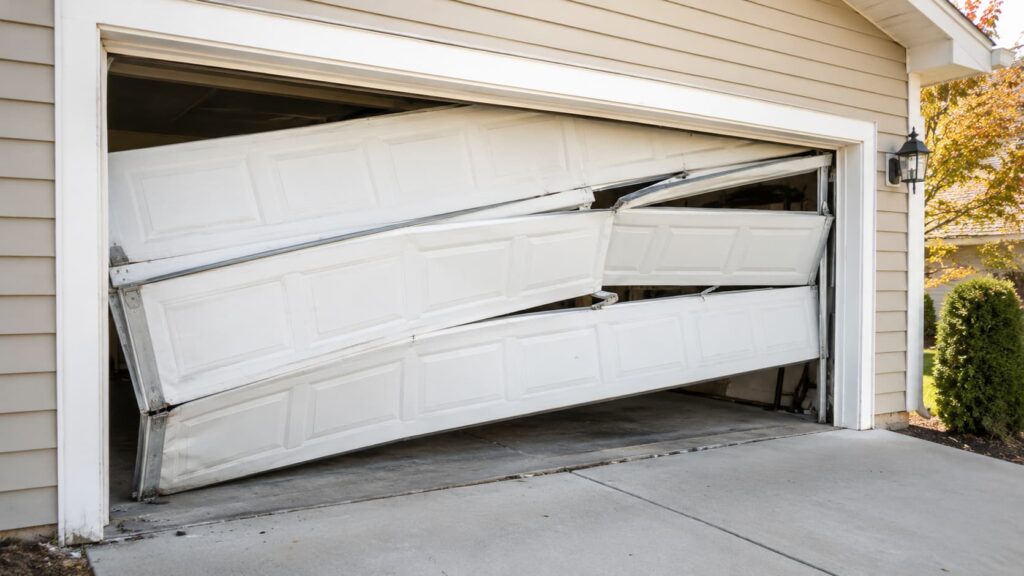
A door that’s come off its track is holding stored energy in the springs and cables. Trying to push or pull the door back into position without first managing that energy can cause the door to drop or a cable to fail. If your door is off track, disengage the opener and call for help. We have a full guide on what to do when your garage door goes off track if you’re dealing with that right now.
Fix It or Call? A Quick Reference
| You can probably handle this | Call a professional |
| Dead remote battery | Broken or worn springs |
| Misaligned or dirty sensors | Snapped or frayed cables |
| Tripped GFCI outlet | Door off track |
| Locked wall console | Stripped opener gears |
| Remote needs reprogramming | Logic board failure |
| Minor track obstruction | Bent track or damaged panels |
| Light bulb replacement in opener | Motor overheating or burning out |
If your problem is in the left column, try the fix yourself. If it’s in the right column, or if the DIY steps didn’t change anything, it’s time to bring in someone with the right tools and experience.
What About a Garage Door That’s Making Noise?
Noise is one of the most searched garage door topics, and the answer depends on what kind of sound you’re hearing.
Grinding or scraping
Usually worn rollers or a track that’s slightly out of alignment. Nylon rollers dry out and crack over time. Steel rollers lose their bearings. If the grinding is new, the rollers are the likely cause. Replacing them is a professional job because the door needs to be secured while each roller is removed.
Rattling or vibrating
Often loose hardware. Check whether the track brackets, hinges, or opener mounting bolts have loosened over time. You can tighten these with a socket wrench. Catching this early prevents it from becoming a bigger issue.
Popping or snapping
This can mean a spring is under uneven stress or a coil is starting to separate. A single loud bang from the garage area usually means a spring has broken. Do not operate the door if you suspect this. It needs professional attention before you use the door again.
Squeaking
Hinges, rollers, and the opener rail all squeak when dry. A silicone-based lubricant on the moving parts quiets things down quickly. This is safe, easy, and worth doing twice a year as regular maintenance.
Garage Door Repair: Common Questions
How do I fix a garage door that won’t open?
Start with the basics: check the remote battery, test the wall button, and confirm the outlet has power. If the opener runs but the door doesn’t move, pull the emergency release and lift the door by hand. A door that feels very heavy points to a spring problem, which needs professional repair. A door that lifts easily but won’t respond to the opener points to an issue with the opener itself.
Why does my garage door close and then open back up?
This is almost always a sensor issue. The safety sensors at the bottom of the tracks are either misaligned, dirty, or blocked by something. Check for obstructions, clean the lenses, and adjust the sensors until both lights are steady. If that doesn’t resolve it, the opener’s close-force setting may need calibration.
Can I fix a garage door spring myself?
This is one repair we consistently recommend leaving to a professional. Each spring is rated for a specific door weight, and using the wrong spring or releasing the tension incorrectly can cause the door to move with unexpected force. HowStuffWorks specifically cautions against attempting repairs on torsion spring systems due to the level of tension involved. This is one situation where the risk clearly outweighs the cost of a service call.
How do I manually open my garage door?
Pull the red emergency release handle from the opener rail. This disconnects the door from the opener so you can lift it by hand. If the springs are working, the door should feel relatively light. If it feels very heavy, the springs may be broken. Avoid forcing it open in that case. Use a sturdy object to prop it if you need to move a car out.
My garage door remote stopped working but the wall button still works. What’s wrong?
Replace the remote battery first. If that doesn’t fix it, check whether the lock feature on the wall console is active, which disables all remotes. If neither is the issue, the remote may need reprogramming, or the opener’s antenna wire (a small wire hanging from the motor unit) may have come loose.
How much does it cost to fix a garage door?
It depends on what’s wrong. Sensor realignment or remote reprogramming cost very little. Spring replacement, cable repair, and opener work involve parts and labor. At Sentinel Garage Door, we always explain what we find and what it costs before we start any work. You can visit our garage door repair page for more on how we approach the diagnostic process.
Tried Everything and Still Stuck?
If you’ve worked through the diagnostic, tried the easy fixes, and the door still isn’t responding, it’s time to have a technician take a look. Sentinel Garage Door provides professional garage door repair across the San Antonio area, including Stone Oak, Shavano Park, Hollywood Park, Castle Hills, Leon Valley, and Timberwood Park. Same-day service is available in most cases.
If you know the spring is the issue, our garage door spring repair page covers what that repair process looks like. If the opener isn’t responding, we have a dedicated page for garage door opener repair as well.
| Call us at (210) 864-9594 or visit sentinelgaragedoorrepair.com to schedule service.
We’re open Sundays and holidays. |