Garage Door Came Off Track? Here’s What’s Happening and What to Do
Quick answer: If your garage door came off track, stop using it immediately. Don’t press the opener button and don’t try to force it by hand. Pull the red emergency release handle to disconnect the motor, secure the door if it’s partially open, and call a professional. Off-track doors involve springs and cables under tension, which makes DIY attempts dangerous. The most common causes are loose track brackets, broken springs, worn rollers, or physical impact. In most cases, the door itself is undamaged and the repair can be completed in a single visit.
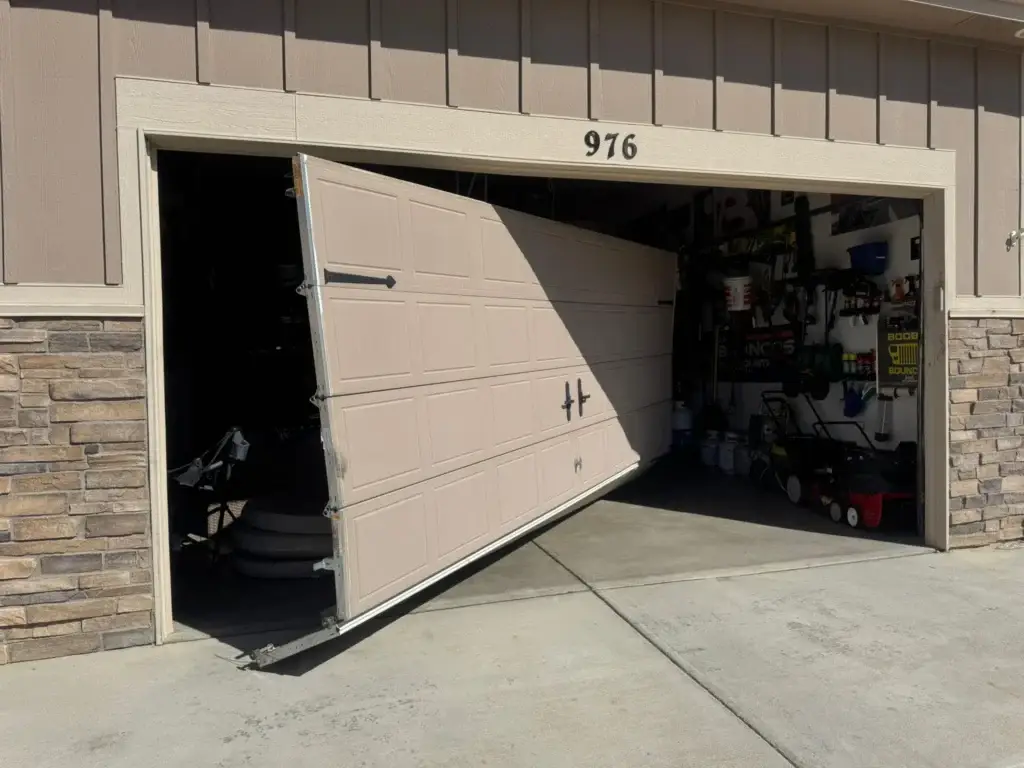
If your garage door just came off its track, take a breath. It looks bad. The door might be hanging sideways, jammed halfway up, or sitting at an angle that makes you think the whole thing is destroyed. We understand the panic. This situation looks a lot worse than it usually is.
At Sentinel Garage Door, an off-track call is one of the most common jobs we handle. While it definitely needs professional attention, we almost never see these turn into a total loss. Most of the time, we get the door back on track and working properly in a single visit.
Before we get into solutions, let’s talk about what actually caused this. Understanding the root issue tells you whether you’re dealing with a one-time event or a sign of a bigger problem.
What Causes a Garage Door to Go Off Track?
A garage door doesn’t just jump off its tracks randomly. Something always triggers it, and in our experience, the root cause usually traces back to how someone originally installed the door.
Loose tracks that weren’t secured properly
The vertical and horizontal tracks guide the door as it moves up and down. Brackets bolt them to the door frame, including the jambs on the sides and the header above. When the installer didn’t mount those brackets tightly, or when the bolts have loosened over the years, things start shifting.
Every open-and-close cycle creates vibration and puts weight on the hardware. Loose brackets allow the track to gradually separate from the frame. Once enough gap forms, a roller slips out. After that first roller pops free, the door loses its path and either jams or tilts.
We run into this frequently in homes where the original crew rushed the installation or didn’t specialize in garage doors. Everything looked fine on day one, but years of daily use revealed the weakness.
Springs that lost tension
This one surprises homeowners, because springs and tracks don’t seem connected. In reality, they depend on each other closely.
Springs create the tension that keeps the whole system balanced. They counterbalance the door’s weight so the opener (or your hands) doesn’t carry the full load. When a spring weakens or snaps, that tension vanishes. Without tension, the cables connecting the springs to the door go slack.
What happens when cables go slack
Slack cables cause serious problems. They can slip off the cable drum, tangle around the torsion shaft, or wrap around themselves. Once a cable leaves its proper position, the door loses balance. One side pulls differently than the other, creating uneven pressure on the tracks and rollers. That imbalance forces the door off track.
Whenever someone calls us about an off-track door, we check the spring system first. If failing springs caused the problem, simply guiding the door back on track without fixing them guarantees it will happen again.
Worn or broken rollers
Rollers are the small wheels sitting inside the track that let the door glide smoothly. Over time, they wear down. Nylon rollers crack. Steel rollers lose their ball bearings. When a roller breaks or seizes up, the attached door panel can pop out of the track right at that point.
Older doors with rollers that haven’t been touched in 10 or 15 years are especially prone to this. A sudden jolt from a snapped cable can also force a roller out of position.
Physical impact to the door or track
Sometimes the cause is straightforward. A car backs into the bottom panel. Someone hits the track with something heavy. The bottom section catches on an object while closing. Any of these impacts can bend a track or knock a roller loose. A dented or bent track prevents the door from traveling smoothly, and the rollers get forced out.
Your Door Just Came Off Track. What Should You Do Right Now?
Okay, so it happened. Here’s what to do, and just as importantly, what to avoid:
Stop using the door immediately
Don’t press the opener button again. Don’t try to force the door up or down by hand. Moving an off-track door risks bending the tracks further, snapping a cable, or causing the door to fall. Just stop.
Disconnect the opener
Pull the red emergency release handle (the rope hanging from the rail). This separates the door from the opener so nobody can activate it accidentally with a remote or a timer. You don’t want the motor trying to drive a jammed door.
Secure the door if it’s partially open
For a door stuck in a half-open position, clamp a pair of locking pliers or a C-clamp on the track just below the lowest roller. This keeps the door from sliding down unexpectedly. An off-track door that’s partially open holds a lot of stored energy, and you don’t want it dropping.
Look, but don’t touch
Check what you can see from a safe distance. Is a cable hanging loose? Can you spot a visible bend in the track? Is a roller sitting outside the track channel? Sharing this information with your technician helps us understand the situation before we arrive and decide whether the repair is safe to start immediately.
Call a professional
An off-track garage door involves springs under tension, heavy panels, and cables that can snap under load. This is not a DIY repair. We say that not to push a service call, but because it’s genuinely dangerous. Even experienced technicians approach off-track doors with caution. After years of doing this work, we still treat every off-track job carefully.
⚠ About doing it yourself: We know YouTube makes it look simple. For someone with the right tools and training, putting a door back on track is manageable. But the real danger isn’t the track itself. It’s the tension stored in the springs and cables. An off-track door with a broken spring holds hundreds of pounds of potential energy. One wrong move releases all of it. We’ve repaired a lot of DIY attempts that turned a $200 fix into a $600 problem. Those were the lucky outcomes.
It Looks Scary, But Most Off-Track Doors Are Fixable
Here’s the honest truth: most off-track garage doors look far worse than they actually are. A door hanging crooked at a sharp angle feels like a major structural failure. In reality, a popped roller, a slipped cable, or a loose track bracket usually explains the whole thing.
What the repair typically looks like
Shifted track: We reposition the track against the frame, re-tighten the brackets, and verify the alignment from top to bottom. Then we check the rollers and guide the door back into place. This is one of the more straightforward fixes.
Slipped or broken cable: We secure the door, replace or re-seat the cable on the drum, and check spring tension to confirm the system is balanced. A cable issue without spring damage usually means a quick repair.
Failed spring: This takes more work. We replace the spring first, then re-tension the cables, and finally guide the door back on track. The process takes longer, but we typically finish it the same day. If you’re dealing with a broken spring alongside an off-track door, check out our garage door spring repair page.
Bent track: A minor bend can sometimes be straightened on-site. A severe bend usually means we need to replace that section of track. We carry common track sizes, so this doesn’t always require a second visit.
The main takeaway: an off-track door has a solution. It’s not a reason to panic, and it’s not always expensive. Addressing it quickly reduces the chance of secondary damage to other parts of the system. If the damage turns out to be too extensive and the door needs replacing entirely, we handle full garage door installation as well.
How to Prevent Your Garage Door From Going Off Track Again?
Once we fix an off-track door, homeowners almost always ask the same question: how do I keep this from happening again? Here are the steps that actually make a difference:
Check the track brackets periodically. Twice a year, look at the brackets holding the tracks to the wall and header. Tighten any loose bolts. This two-minute task prevents the most common cause of off-track doors.
Listen for new sounds. A garage door that starts grinding, scraping, or clicking is sending you a signal. Those noises often mean a roller is wearing out or a track is starting to shift. Catching it early is the cheapest fix there is.
Replace frayed cables before they snap. If you notice a cable that looks worn, frayed, or thin in spots, have it replaced. A snapped cable is one of the most common triggers for an off-track situation.
Keep the tracks clean. Dirt, debris, and small pebbles accumulate in the tracks over time, especially near the floor. A quick wipe-down prevents obstructions that can force a roller out of its path.
Test the door’s balance. Disconnect the opener and lift the door halfway by hand. If it feels heavy or drops on its own, the springs are losing tension. That imbalance stresses everything else. Getting the springs adjusted before they fail completely is the best preventive step you can take.
Take an extra second when backing out. It sounds obvious, but a surprising number of off-track calls start with a car bumping the bottom panel. Even a minor hit at the wrong angle can bend a track or push a roller out. Make sure the door is fully open before pulling out.
Need Help With an Off-Track Door?
If your garage door is off track, don’t wait and don’t try to muscle it back into place. Sentinel Garage Door handles off track garage door repair across San Antonio and surrounding areas, including Stone Oak, Shavano Park, Hollywood Park, Castle Hills, Leon Valley, and Timberwood Park. Same-day service is available in most cases.
If the issue involves a broken spring or a damaged cable, we take care of those too. Visit our garage door repair services page for the full picture. If your situation can’t wait, check our emergency garage door repair page or call us directly.
Call us or schedule a service appointment online. We’ll get your door back where it belongs.