Why Won’t My Garage Door Stay Open?
A garage door that refuses to stay open is almost always dealing with a spring tension or balance problem. When the spring system is working correctly, the door should hold its position at any height without drifting. If it slowly creeps down or drops quickly as soon as you let go, the springs are likely the first place to look. Cables and drums can also contribute to the problem, but in most cases the spring system is the root cause.
A Balanced Door Should Hold Its Position
This is worth understanding because a lot of homeowners are surprised to hear it. A properly tuned garage door will stay in place when you lift it by hand and release it. It should not drift up toward the ceiling, and it should not slowly slide back down to the floor. If yours does either of those things, the system is out of balance.
The springs are responsible for counterbalancing the weight of the door. When the tension is right, the door feels nearly weightless and stays wherever you put it. When something is off, the door wants to move on its own.
Weak or Worn Springs
Springs lose tension gradually. It usually happens slowly enough that homeowners don’t notice right away. The door still opens and closes, but it has started drifting back down after a few seconds. Many people assume the opener is the problem, or that the door just needs a little push.
In most of these cases, the springs have simply worn down and no longer hold enough tension to keep the door balanced. This is a natural part of spring life, not a sign that anything was done wrong. Springs are rated for a certain number of cycles, and eventually they wear out. When they do,
is the right call.

Incorrect Spring Tension
A door that won’t stay open is not always dealing with a worn spring. Sometimes the tension is simply not set correctly for the weight of that specific door. This can happen after a spring replacement where the sizing or winding was slightly off. It can also happen if someone adjusted the springs without fully accounting for the door’s weight.
Either way, the fix is the same. A technician needs to assess the system, check the tension against the door’s actual weight, and make the right adjustments. Garage door spring repair in San Antonio includes that balance check as part of the service, not as an afterthought.
A Broken or Partially Failed Spring
A completely broken spring is usually obvious. You may have heard a loud bang, and now the door barely moves or drops fast when released. But a partially failed spring is trickier. The spring may still be in one piece but has lost enough tension that it can no longer support the door’s weight properly.
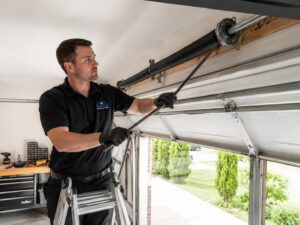
In either case, the door will not stay open. And in both cases, trying to fix the spring yourself is not worth the risk. The tension stored in a torsion spring is significant, and adjusting or replacing one without the right tools can cause serious injury.
We Can Usually Help the Same Day
If your door won’t stay open, don’t keep forcing it.
Call Sentinel Garage Door Repair at (210) 864-9594. We handle this kind of problem regularly across San Antonio. Homeowners searching for garage door repair in Timberwood Park or garage door repair in Inwood can usually count on a same-day visit. We will check the springs, the balance, and the full system before recommending anything.
Cable and Drum Problems
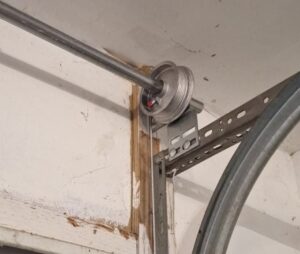
The cables run along the sides of the door and wrap around drums at the top of the tracks. If a cable is fraying, has jumped off the drum, or is worn unevenly, the door can behave strangely. It may fall faster on one side, feel lopsided when you lift it, or lose the ability to stay in position.
Cable problems are closely related to spring problems. When the spring system fails, extra strain goes to the cables. When a cable slips or breaks, the balance of the door is affected. A good technician will check both when diagnosing a door that won’t stay open.
The Opener Was Not Built to Hold the Door
This is one of the most common misunderstandings we run into. When a door won’t stay open, some homeowners assume the opener is just holding it up and that everything is fine. The opener is not designed to carry the weight of the door. Its job is to move a door that is already properly counterbalanced by the springs.
When the springs are weak or the door is out of balance, the opener has to compensate. Over time, that extra strain damages the motor, shortens the life of the drive system, and can lead to much more expensive repairs. If you notice your opener struggling or running louder than usual, looking into garage door opener repair alongside a spring check is a smart move.
When to Stop Using the Door
If your door drops quickly when released, there is a real safety concern. A door falling under its own weight is unpredictable and can cause injury. Stop using the door manually, and if you have to use the opener, do it carefully and watch the door throughout the cycle.
If the door won’t stay open at all, or it falls more than a few inches after you let go, that is the point to call for service. Continuing to use a door in that condition puts extra wear on every part of the system, and a problem that starts as a spring tension issue can turn into cable damage, opener failure, or track problems if it goes on long enough.
The Bottom Line
A garage door that won’t stay open is almost always a spring issue. Weak springs, worn tension, a partially failed spring, or a balance problem are the most common causes. Cables and drums can make things worse. Whatever the source, the fix is getting a technician to assess the system and correct the tension. The sooner that happens, the less wear the rest of the system takes.