How Much Does Garage Door Spring Repair Cost? A San Antonio Homeowner’s Guide
| Quick Answer: Most homeowners in the San Antonio area pay between $300 and $540 for garage door spring repair. Extension springs tend to come in on the lower end of that range, while torsion springs generally cost more because of the components involved and how they’re installed. If you got a quote well under $200 or over $900 for a standard residential door, it’s worth a second look. This article breaks down what goes into the price so you know what to expect before you call.
|
What Garage Door Spring Repair Usually Costs
Spring repair is one of the most common garage door calls we get. And it’s also one of the most misquoted. Prices vary based on the type of spring your door uses, how many springs need replacing, and whether the parts come with a meaningful warranty.
According to This Old House, replacing a garage door spring typically costs between $300 and $540. Extension springs tend to start around $300, while torsion springs often run closer to $600
0 or more because of the precision involved in tensioning them correctly.
Those numbers reflect labor and parts for a standard residential door. The final cost can shift depending on the spring type, the size and weight of your door, and whether you go with standard or high-cycle springs.
| Spring Type | Typical Cost Range | Notes |
| Extension Spring | $300 and up | One or two springs on side tracks |
| Torsion Spring | $400–$540+ | Mounted above door, higher precision |
| High-cycle / heavy-dut
y |
$500–$700+ | Longer warranty, more durable materials |
The Two Types of Springs (And Why the Difference Matters)
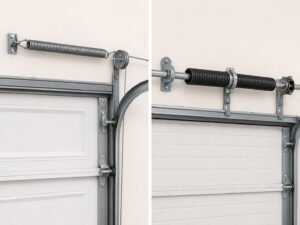
Not all garage doors use the same spring system. Before a technician gives you a price, they should tell you which type your door has. That detail shapes the cost, the labor time, and the right replacement part.
Extension Springs
These run along the horizontal tracks on either side of the door. Most older or lighter residential doors use them. They’re generally simpler to work with, and parts cost less. That said, they still need to be handled carefully because they’re under tension when the door is closed.
Extension springs usually come in pairs. If one breaks, replacing both at the same time is the practical move since the second one is likely near the end of its life too.
Torsion Springs
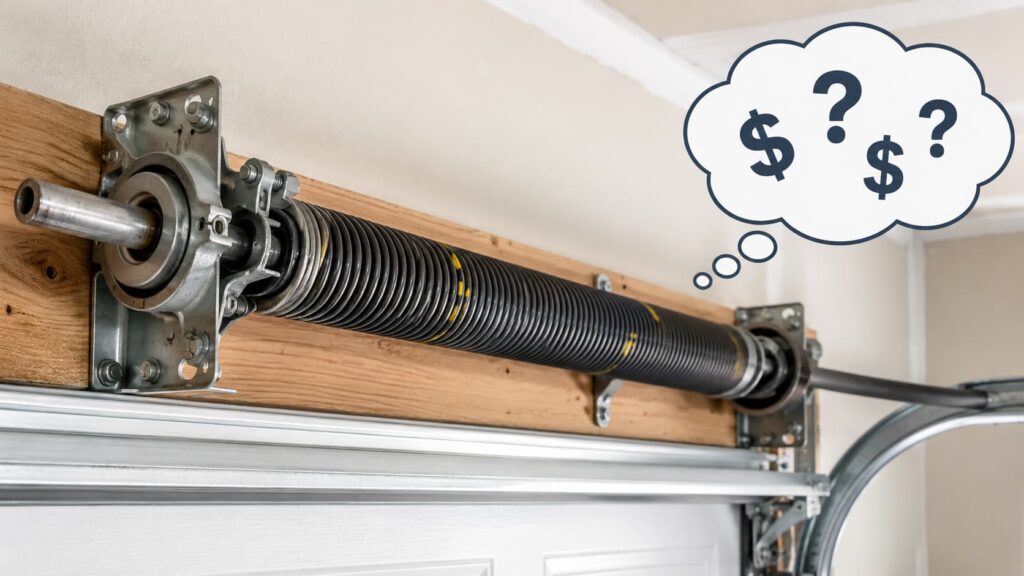
Torsion springs mount on a steel bar directly above the garage door opening. They work by twisting, not stretching, which makes them more durable and better suited to heavier doors. Most modern homes have torsion systems.
Because torsion springs store a lot of tension, installation requires the right tools and experience. Adjusting the tension incorrectly can cause the door to open unevenly or put strain on the opener. This is part of why the labor cost is a bit higher.
What Pushes the Price Up or Down
Once you know the spring type, the next question is what else affects your specific quote. A few things come into play:
- Spring size and weight rating: Heavier doors need springs with higher lift capacity. Using an undersized spring is a common mistake that leads to early failure.
- Number of springs: Single-car doors often use one spring. Two-car doors typically need two. Replacing both adds cost, but it’s usually the right call.
- High-cycle vs. standard springs: Standard springs are rated for around 10,000 cycles. High-cycle springs handle 25,000 or more and come with a longer warranty. They cost more upfront but last significantly longer.
- Labor and travel: Most spring repair companies in San Antonio charge a flat service fee plus parts. Same-day calls or weekend availability can affect the rate.
- Parts quality: There’s a real difference between bargain parts and quality components. Springs that cost less to source often don’t last as long.
| Tip: Ask the technician what cycle rating the replacement spring carries. A spring rated for 10,000 cycles on a busy household door can wear out in 5 to 7 years. A 25,000-cycle spring on the same door can last 15 or more. |
A Real Example: When the Price Felt Wrong
When we started out, most of our early calls came from the Leon Valley and surrounding areas. One thing we got into the habit of early on was asking homeowners how old their spring was before we even looked at the door. That question tells you a lot. A spring that breaks after 10 or 12 years is normal. One that breaks after a year or two is a red flag.
We had a call from a homeowner
r in Apple Creek who told u
s he’d had his spring replaced about a year earlier by another company. The door had stopped working again, and he wanted to know why.
Two things stood out immediately. First, the spring that was installed was undersized for his door. It wasn’t the right weight rating, which meant it was working harder than it should have been from day one. Second, he mentioned the original company charged him just over $1,000 for the job.
That price is well outside what a standard spring replacement should cost. And the spring they installed didn’t match the door. Those two things together explained exactly why it failed early.
We replaced it with the correct spring and showed him what to look for if he ever calls a garage door company again. Getting the right spring matters as much as the repair itself.
Repair or Replace? What Actually Makes Sense
In most cases, a broken spring means replacing it.
Springs don’t really get repaired; they get swapped out. The question is whether to replace just the spring or consider replacing the spring system along with it.
If your current springs are standard cycle and more than 7 or 8 years old, moving to a high-cycle option during the repair is worth thinking about. The cost difference isn’t dramatic, but the lifespan difference is.
If your door is older and the opener is also showing strain, that’s a different conversation. A spring puts load on the opener every time the door moves. A worn opener and a new spring can still lead to problems.
For anything beyond a straightforward spring swap, our garage door repair page covers the full picture of what goes into a proper diagnosis.
More Information on Spring Services
If you’re trying to understand your options in more detail, these pages cover the specifics:
- Garage Door Spring Repair in San Antonio — what the repair process involves and what to expect on the day of service, when a full replacement is the right move and how we approach it
Frequently Asked Questions
How much does garage door spring repair cost in San Antonio?
Most homeowners pay between $300 and $540. Extension springs come in on the lower end, while torsion springs typically cost more. The final number depends on the spring type, size, and whether you go with standard or high-cycle parts.
Why did I get a quote over $700 for a garage door spring?
Quotes above $700 can be legitimate if you’re looking at high-cycle springs with extended warranties, or if your door is unusually large and needs oversized components. For a standard residential door, it’s reasonable to ask what’s driving that price. A second opinion doesn’t hurt.
How long should a garage door spring last?
Standard springs are typically rated for around 10,000 cycles. For a household that opens the garage door four times a day, that works out to roughly 7 to 10 years. Springs that fail after one or two years were either the wrong size for the door or low-quality parts.
Can I replace just one garage door spring?
You can, but replacing both is usually the smarter call. If one broke, the other is likely at a similar point in its lifespan. Replacing both in the same visit avoids a second service call within a year or two.
Is it safe to use my garage door with a broken spring?
No. A door without a working spring is much heavier to lift and puts serious strain on the opener motor. Most residential doors weigh 150 to 200 pounds, and the spring does most of the lifting work. Leave the door in place and have it looked at before using it.
If you need any help or service’ you can go to sentinel garage door repair