Mon (to) Sun: 7:30am - 8:00pm

San Antonio

Garage Door Spring Types Explained: Which One Is in Your Garage?

QUALITY GARAGE DOOR SOLUTION

garage door torsion springs

Garage Door Spring Types Explained:

There are three main spring systems in residential garage doors: torsion springs, extension springs, and the Wayne Dalton TorqueMaster. Torsion springs are the industry standard. They last longer, operate more smoothly, and are safer when they break. Extension springs are the oldest design and typically a last resort. In most San Antonio homes, where ceiling clearance is generous, there’s no reason to use them. TorqueMaster springs are found exclusively on Wayne Dalton doors. They work, but come with limitations around parts and service. This post explains how each system works, how to identify yours, and what to consider before replacing a broken spring.
garage door torsion springs
Most homeowners never think about garage door springs until one breaks. Then the door won’t move, and suddenly you’re Googling terms you’ve never seen before, trying to figure out what went wrong and what it’s going to cost. Here’s what’s worth knowing before you get to that point: not all springs are the same. The type of spring in your garage affects how long it lasts, how smoothly the door operates, how safe it is, and what you’ll pay when it eventually needs replacing. There are three main spring systems used in residential garage doors. We work with all of them. But we have a clear preference, and we’ll explain why.

Torsion Springs: The Industry Standard

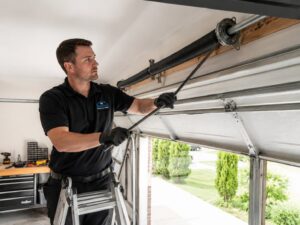
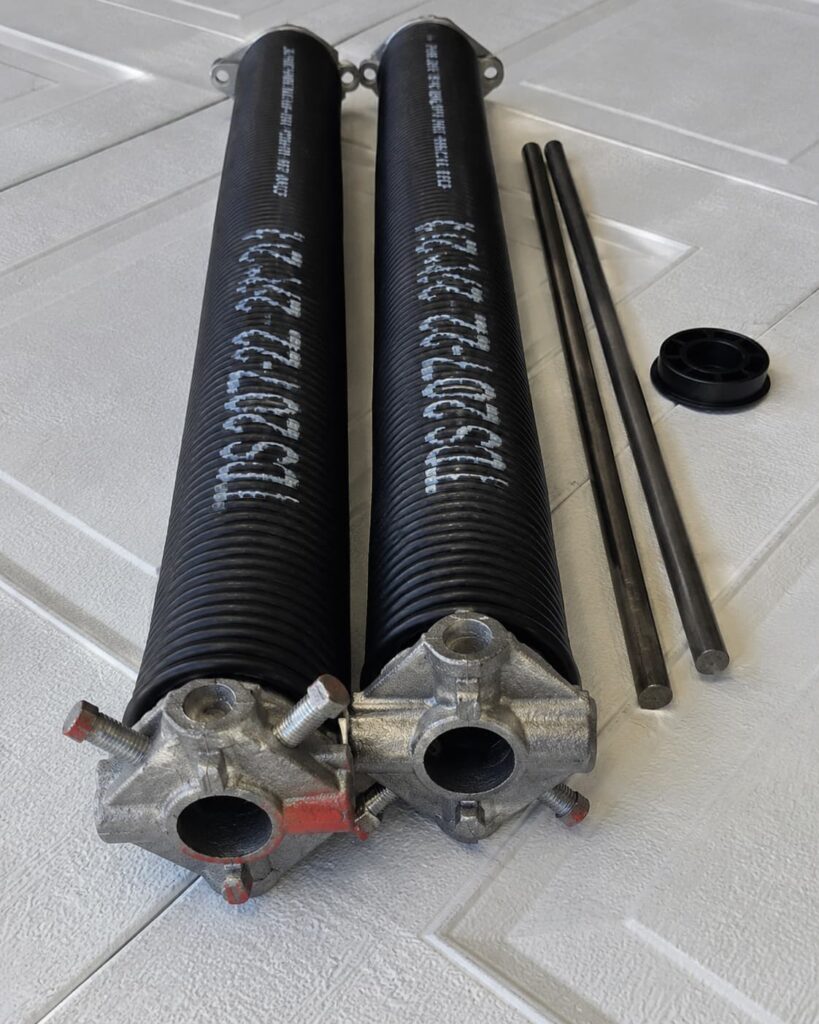
Torsion springs mount horizontally on a metal shaft above the garage door, right along the header. When the door closes, the springs wind up and store energy. When the door opens, they release that energy in a controlled, even motion through the torsion bar, cables, and cable drums on each side. This is the most common spring type in modern residential installations, and it’s what we install by default on most jobs across San Antonio.

Why We Prefer Torsion Springs

  • Longer lifespan. A standard torsion spring is rated for around 10,000 cycles. High-cycle springs reach 25,000 to 50,000. For a household using the door 3 to 4 times a day, a standard spring lasts roughly 7 to 10 years. A high-cycle spring can go well over 15.
  • Smoother operation. Force distributes across the full width of the torsion bar, so the door moves evenly with no side-to-side wobble. That also puts less long-term wear on the tracks and rollers.
  • Safer when they fail. A broken torsion spring stays on the shaft. You’ll hear a loud bang and the door won’t open, but the spring stays contained above the door — not flying across the garage.
  • More options for heavy doors. Torsion springs come in a wide range of sizes and wire gauges, so we can match the spring precisely to the door’s weight. Proper sizing is critical for both longevity and safe operation.
Tip: If your garage runs on extension springs and you’re facing a replacement, ask about converting to torsion. The upfront cost is slightly higher, but the lifespan and safety improvement make it a worthwhile upgrade for most homeowners.

Wayne Dalton TorqueMaster: Enclosed Design, Real Limitations

If you have a Wayne Dalton garage door, there’s a good chance it uses a TorqueMaster spring system. From the outside it looks similar to a torsion setup. A metal tube runs above the door. But the spring sits inside that tube, fully enclosed. Wayne Dalton built it this way for safety, and on that point it delivers. The spring is completely contained. There’s no risk of it flying off or being exposed during a failure.

Where TorqueMaster Falls Short

  • Shorter cycle life. TorqueMaster springs tend to wear out faster than standard torsion springs. We see them fail sooner, sometimes significantly sooner, on heavier doors.
  • Proprietary service. The enclosed design means you need a specific winding tool to replace the spring. Not every garage door company carries it or has experience with these systems, which can mean longer wait times and higher repair costs.
  • Two versions that don’t cross. Wayne Dalton makes the TorqueMaster 1 and the TorqueMaster 2. They’re not interchangeable. If yours is the older version and parts become harder to source, conversion to a standard torsion setup may eventually be the only option.
We carry the necessary tools and work on TorqueMaster systems regularly. But when a homeowner asks our honest opinion after a TorqueMaster failure, we often recommend converting to a standard torsion spring during that repair. The long-term value is better.

Extension Springs: The Last Resort

Extension springs run along the horizontal tracks on each side of the door. They stretch when the door closes and pull it open through a system of pulleys and cables. They’re the oldest spring design still in common use. We install extension springs only when ceiling clearance is too low for a torsion setup. That situation comes up occasionally, but in north San Antonio it’s rare. Most homes in this area have enough clearance for torsion springs, which means there’s rarely a reason to settle for extension springs if you have a choice.

Why Extension Springs Rank Last

  • Shorter lifespan. Extension springs wear out faster than torsion springs. The repeated stretching motion creates metal fatigue more quickly, and in our experience they often start losing tension before reaching their rated cycle count.
  • Less balanced operation. Force comes from two separate springs on opposite sides of the door. Even slight differences between them cause the door to lift unevenly, which adds wear to the tracks, rollers, and cables over time.
  • Serious safety risk when they break. This is the biggest issue. When an extension spring snaps, it can fly across the garage with real force. Safety cables (threaded through each spring) exist to contain a broken spring, but a surprising number of older installations in San Antonio don’t have them.
Safety: Extension springs without safety cables are a serious hazard. A snapped spring becomes a projectile. If your garage has extension springs and no safety cables running through them, adding them is one of the cheapest and most important safety upgrades you can make. We can add them during any service visit.

Side-by-Side Comparison

 
Torsion TorqueMaster Extension
Lifespan 10,000–50,000 cycles 7,000–15,000 cycles 8,000–10,000 cycles
Smoothness Excellent. Even, balanced. Good. Similar to torsion. Fair. Can be uneven.
Safety Spring stays on shaft Fully enclosed in tube Can fly if no safety cable
Repair ease Standard tools, widely serviced Proprietary tools needed Simple but less available
Cost Moderate Higher (specialized parts) Lowest upfront
Best for Most residential doors Wayne Dalton doors only Low-clearance only
Verdict Recommended Serviceable, but limited Last resort
 

How to Tell Which Spring Type Is in Your Garage

You don’t need to be a technician to figure this out. A quick look above and alongside the door tells you most of what you need to know.

Torsion Spring

Look above the door at the header. If you see one or two tightly wound coil springs on a horizontal metal bar, with cables running down to drums on each side, those are torsion springs. This is the most common setup in San Antonio homes built in the last 20 years.

Wayne Dalton TorqueMaster

If you have a Wayne Dalton door and you see a smooth metal tube above the door with no visible spring coils, that’s a TorqueMaster. The spring sits inside the tube. You may notice a small winding cone on one end of the tube.

Extension Springs

Look along the horizontal tracks on both sides of the door. If you see long springs stretching parallel to the tracks with a pulley and cable at the end, those are extension springs. Older homes and garages with low ceilings are the most common places to find them.  

Why You Shouldn’t Replace a Garage Door Spring Yourself

Garage door springs are under significant tension. A standard torsion spring stores enough energy to cause serious injury if it releases unexpectedly during handling. This isn’t a job that requires skill so much as it requires the right tools, the right technique, and knowing exactly what can go wrong. Winding or unwinding a torsion spring by hand without proper winding bars is one of the more common causes of garage door injuries we hear about. Extension springs carry similar risks, especially older ones without safety cables. Beyond the safety concern, an incorrectly sized or improperly tensioned spring puts extra strain on the opener, the cables, and the door itself, often leading to a second repair sooner than expected. If your spring broke, the right move is to disconnect the opener and leave the door in place until a technician arrives. We handle garage door spring repair and garage door spring replacement across San Antonio. Most jobs are completed same day, and we carry the most common spring sizes on the truck.  

Need a Spring Replaced or Upgraded?

Whether your spring just broke, you’re hearing sounds that don’t seem right, or you want to convert from extension to torsion, we can help. Sentinel Garage Door handles garage door spring repair across the San Antonio area. We carry common spring sizes on our trucks and complete most jobs the same day.

Garage Door Spring Questions

It depends on the type and quality. A standard torsion spring lasts roughly 7 to 10 years with normal use (3 to 4 cycles per day). High-cycle torsion springs can go 15 years or more. Extension springs and TorqueMaster springs tend to wear out sooner. Usage frequency matters more than calendar age. A household that opens and closes the garage door 8 times a day will burn through springs much faster than one that uses it twice.
Yes. We do this conversion regularly, especially in north San Antonio where most homes have enough ceiling clearance for a torsion setup. It requires installing a torsion bar, new brackets, and properly sized springs. The door itself stays the same. The result is smoother operation, a longer spring life, and better safety. If your extension springs just broke and you're considering a replacement, it's worth upgrading at the same time.
The most common reason is simple wear. Springs have a finite number of cycles, and every open and close counts toward that limit. Corrosion is another factor, particularly in humid climates. Poor initial sizing plays a role too. If the original installer used a spring that was too light for the door's weight, it worked harder on every cycle and wore out faster. San Antonio's heat adds thermal stress as well. Metal expands and contracts with temperature, and that daily movement accumulates over time.
No. A broken spring means the door is unbalanced and placing its full weight on the opener, which isn't built to handle that. Forcing the door open risks damaging the opener, snapping a cable, or causing the door to fall without warning. If a spring breaks, stop using the door and disconnect the opener. Call a professional for a spring repair or replacement before operating the door again.
The cost varies depending on spring type, size, and whether one or both springs need replacing. We always recommend replacing both springs at the same time, even if only one broke. The second spring carries the same amount of wear and will likely fail soon after. We provide a clear quote before starting any work. No surprises.

Recent Posts

fill out the form below to request a free estimate.
We’ll respond quickly, show up on time, and explain what’s going on before any work begins. No surprises, just honest answers about what your garage door actually needs