Garage Door Spring Types Explained:
There are three main spring systems in residential garage doors: torsion springs, extension springs, and the Wayne Dalton TorqueMaster. Torsion springs are the industry standard. They last longer, operate more smoothly, and are safer when they break. Extension springs are the oldest design and typically a last resort. In most San Antonio homes, where ceiling clearance is generous, there’s no reason to use them. TorqueMaster springs are found exclusively on Wayne Dalton doors. They work, but come with limitations around parts and service. This post explains how each system works, how to identify yours, and what to consider before replacing a broken spring.
Torsion Springs: The Industry Standard
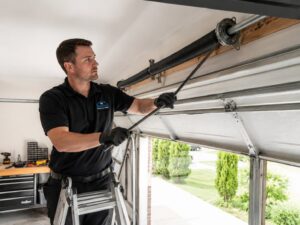
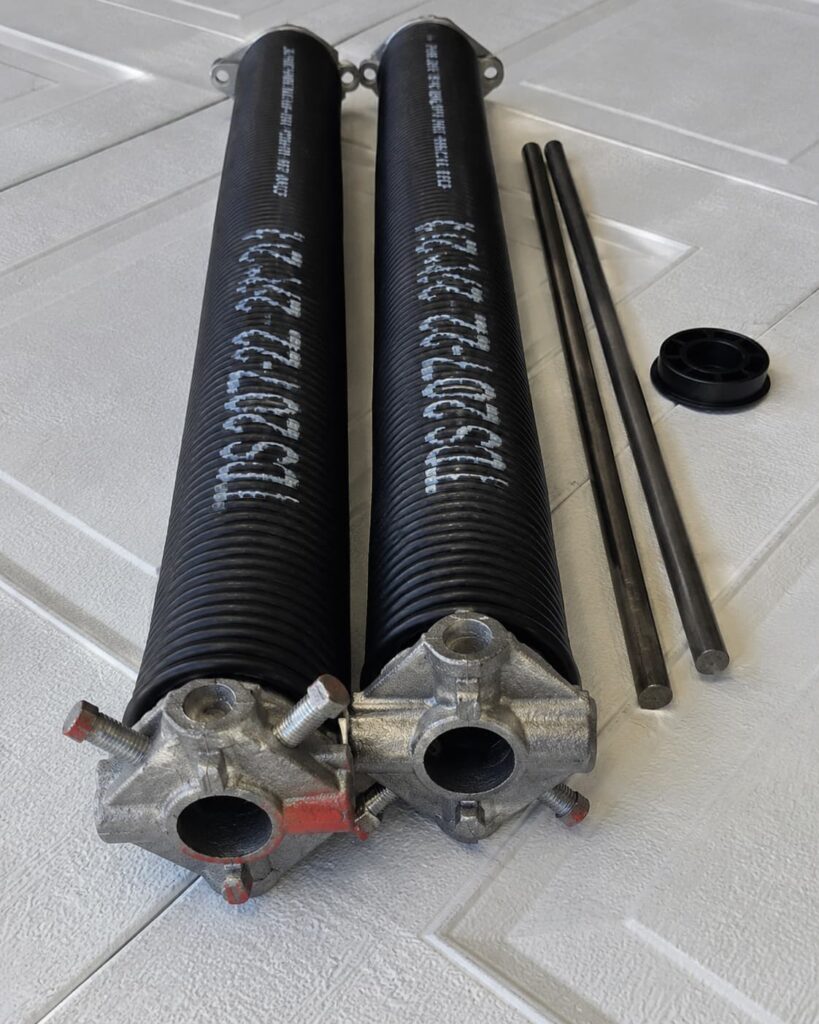
Torsion springs mount horizontally on a metal shaft above the garage door, right along the header. When the door closes, the springs wind up and store energy. When the door opens, they release that energy in a controlled, even motion through the torsion bar, cables, and cable drums on each side. This is the most common spring type in modern residential installations, and it’s what we install by default on most jobs across San Antonio.Why We Prefer Torsion Springs
- Longer lifespan. A standard torsion spring is rated for around 10,000 cycles. High-cycle springs reach 25,000 to 50,000. For a household using the door 3 to 4 times a day, a standard spring lasts roughly 7 to 10 years. A high-cycle spring can go well over 15.
- Smoother operation. Force distributes across the full width of the torsion bar, so the door moves evenly with no side-to-side wobble. That also puts less long-term wear on the tracks and rollers.
- Safer when they fail. A broken torsion spring stays on the shaft. You’ll hear a loud bang and the door won’t open, but the spring stays contained above the door — not flying across the garage.
- More options for heavy doors. Torsion springs come in a wide range of sizes and wire gauges, so we can match the spring precisely to the door’s weight. Proper sizing is critical for both longevity and safe operation.
Wayne Dalton TorqueMaster: Enclosed Design, Real Limitations
If you have a Wayne Dalton garage door, there’s a good chance it uses a TorqueMaster spring system. From the outside it looks similar to a torsion setup. A metal tube runs above the door. But the spring sits inside that tube, fully enclosed. Wayne Dalton built it this way for safety, and on that point it delivers. The spring is completely contained. There’s no risk of it flying off or being exposed during a failure.Where TorqueMaster Falls Short
- Shorter cycle life. TorqueMaster springs tend to wear out faster than standard torsion springs. We see them fail sooner, sometimes significantly sooner, on heavier doors.
- Proprietary service. The enclosed design means you need a specific winding tool to replace the spring. Not every garage door company carries it or has experience with these systems, which can mean longer wait times and higher repair costs.
- Two versions that don’t cross. Wayne Dalton makes the TorqueMaster 1 and the TorqueMaster 2. They’re not interchangeable. If yours is the older version and parts become harder to source, conversion to a standard torsion setup may eventually be the only option.
Extension Springs: The Last Resort
Extension springs run along the horizontal tracks on each side of the door. They stretch when the door closes and pull it open through a system of pulleys and cables. They’re the oldest spring design still in common use. We install extension springs only when ceiling clearance is too low for a torsion setup. That situation comes up occasionally, but in north San Antonio it’s rare. Most homes in this area have enough clearance for torsion springs, which means there’s rarely a reason to settle for extension springs if you have a choice.Why Extension Springs Rank Last
- Shorter lifespan. Extension springs wear out faster than torsion springs. The repeated stretching motion creates metal fatigue more quickly, and in our experience they often start losing tension before reaching their rated cycle count.
- Less balanced operation. Force comes from two separate springs on opposite sides of the door. Even slight differences between them cause the door to lift unevenly, which adds wear to the tracks, rollers, and cables over time.
- Serious safety risk when they break. This is the biggest issue. When an extension spring snaps, it can fly across the garage with real force. Safety cables (threaded through each spring) exist to contain a broken spring, but a surprising number of older installations in San Antonio don’t have them.
Side-by-Side Comparison
| Torsion | TorqueMaster | Extension | |
| Lifespan | 10,000–50,000 cycles | 7,000–15,000 cycles | 8,000–10,000 cycles |
| Smoothness | Excellent. Even, balanced. | Good. Similar to torsion. | Fair. Can be uneven. |
| Safety | Spring stays on shaft | Fully enclosed in tube | Can fly if no safety cable |
| Repair ease | Standard tools, widely serviced | Proprietary tools needed | Simple but less available |
| Cost | Moderate | Higher (specialized parts) | Lowest upfront |
| Best for | Most residential doors | Wayne Dalton doors only | Low-clearance only |
| Verdict | Recommended | Serviceable, but limited | Last resort |